EVENT DESCRIPTION
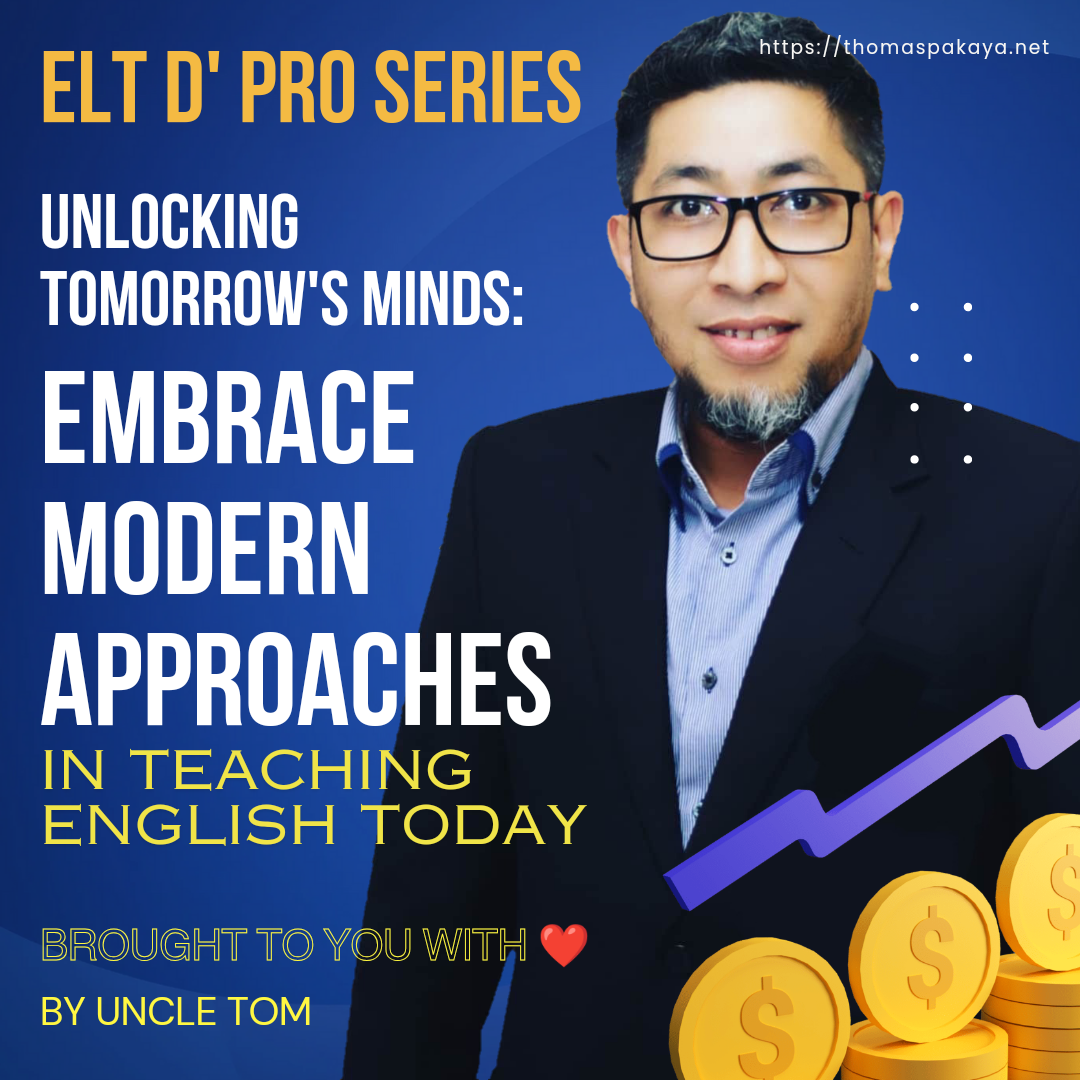
“Unlocking Tomorrow’s Minds: Embrace Modern Approaches in Teaching English Today!
Gone are the days of traditional chalkboard lectures. Welcome to the era of dynamic, interactive learning experiences. With modern approaches in teaching, we’re revolutionizing education as we know it.
Imagine classrooms buzzing with excitement as students dive into virtual reality simulations, collaborate globally through online platforms, and engage with immersive multimedia content. This isn’t just a vision of the future—it’s the reality of today’s innovative educators.
From flipped classrooms to gamification, from personalized learning paths to AI-driven tutoring, the landscape of education is evolving at a rapid pace. These modern approaches cater to diverse learning styles, fostering creativity, critical thinking, and real-world problem-solving skills.
By embracing modern approaches in teaching, we’re not just preparing students for the challenges of tomorrow; we’re empowering them to shape the future. Join the movement towards educational excellence. Together, let’s inspire, innovate, and ignite the minds of the next generation.”
OVERVIEW
This training program is a program that provides:
- Creative, innovative, effective, efficient, and enjoyable learning designs.
- Simple and practical, structured, and measurable practices.
- Direct experience.
GENERAL OBJECTIVES
The general objectives of this training are aligned with the contemporary theories and practices in language education, aiming to equip trainees with the necessary language skills and competencies to thrive in an increasingly interconnected and diverse world.
SPECIFIC OBJECTIVES
Modern approaches in teaching English aim to provide trainees with the skills, knowledge, and attitudes they need to effectively communicate in English in today’s globalized world.
LEARNING TARGETS
- The learning targets of modern approaches in teaching English typically encompass a range of linguistic, communicative, and cognitive skills.
- The multifaceted nature of language learning and the diverse skills and competencies required for effective communication in English within contemporary educational contexts.
PROGRAM STRUCTURE & METHODS
1). SYNCHRONOUS (16 hours).
A] Classroom Learning (8 hours).
-
- – Presentation.
- – Facilitation.
- – Q&A.
- – Case Studies.
B] In-Class Practice (8 hours).
-
- – Modeling and Role Play.
- – Individual, Peer, and Group Practice.
- – Practice with Observation and Feedback.
2). ASYNCHRONOUS (Self-Directed Learning – 100 hours).
- Collaborative Self-Learning (20 hours).
- Task-Based Learning (30 hours).
- Portfolio (30 hours).
- Self-Reflection (10 hours).
- Quizzes and Assessment (10 hours).